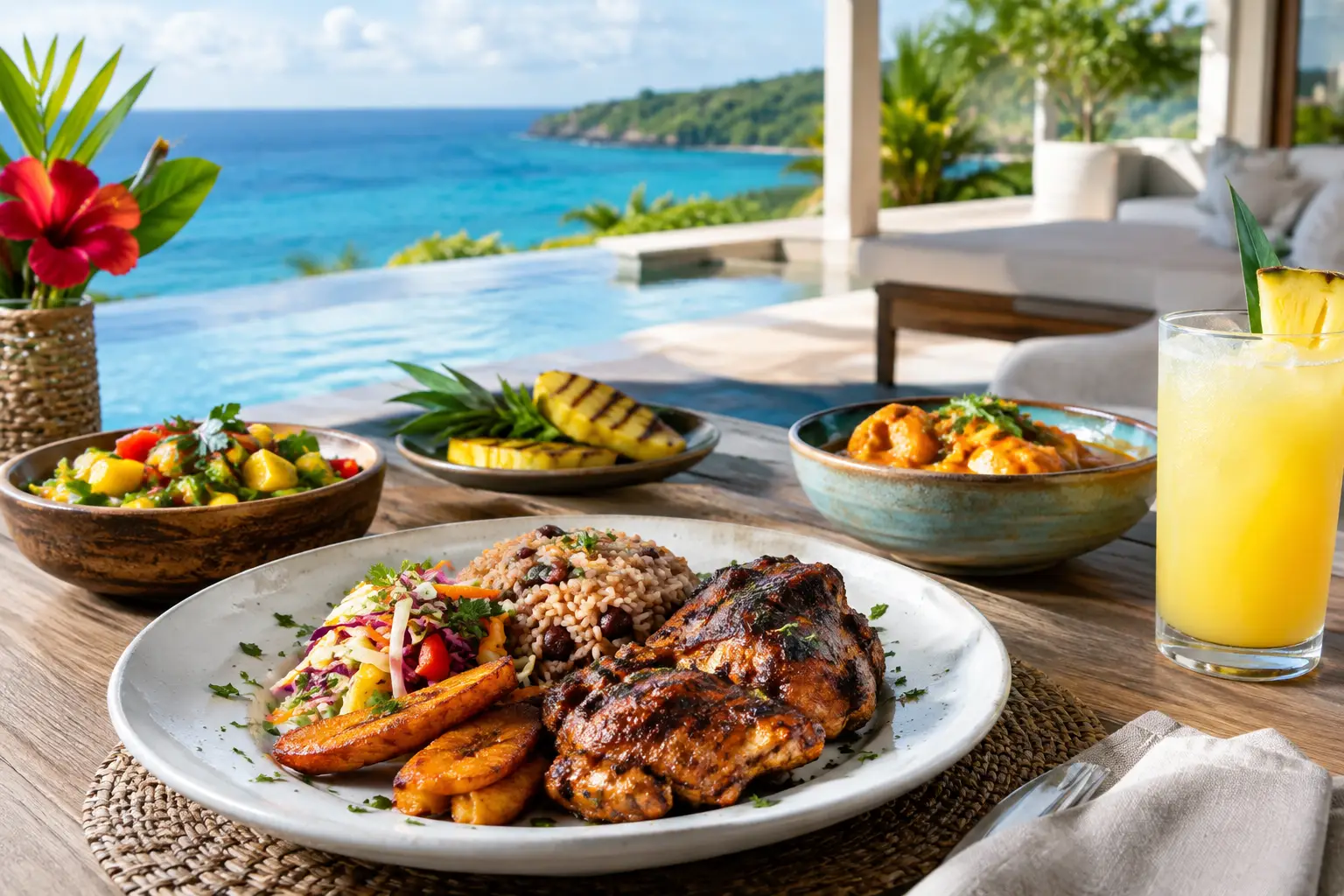
Caribbean Dinner Ideas for a Private Villa

A memorable dinner in a Caribbean villa begins well before the first plate reaches the table. The best Caribbean dinner ideas use the setting as part of the meal: warm evening air, a table set with intention, ingredients at their seasonal peak, and food that feels polished without becoming overly formal. For travelers staying along Costa Rica’s South Caribbean coast, a private dinner can turn an ordinary night at the villa into the occasion everyone remembers.
The goal is not to recreate a generic beach menu. It is to bring together the region’s tropical produce, coastal seafood, aromatic herbs, and Costa Rican culinary character in a meal with a clear sense of place. A thoughtful menu should also fit the rhythm of a vacation: relaxed enough to enjoy slowly, yet carefully paced from the first welcome bite through dessert.
Caribbean Dinner Ideas That Feel Refined
Caribbean food is often described in broad strokes, but the most compelling meals are built on contrast. A rich fish course benefits from citrus and herbs. Sweet plantain becomes more interesting with a touch of spice or acidity. Coconut can add body and fragrance without making every dish taste the same.
For a private villa dinner, begin with a composed opening course rather than a heavy appetizer. Ceviche made with the day’s available catch, brightened with lime, cilantro, tropical fruit, and a measured amount of chile, offers a clean start. It is light enough for a humid evening and immediately establishes the flavor profile of the meal.
A second course might take a more vegetal direction: roasted seasonal vegetables with creamy coconut elements, crisp plantain, fresh herbs, or a citrus vinaigrette. This course is where texture matters. A soft purée, a crunchy garnish, and a bright dressing give the plate dimension while keeping it connected to Caribbean ingredients.
For the main course, fish is a natural choice when freshness and availability align. A fillet of snapper, mahi-mahi, or another locally available catch can be paired with coconut rice, tropical salsa, and a refined sauce made from herbs, stock, or roasted peppers. Seafood is not the only direction, however. Slow-cooked pork, chicken with Caribbean spices, or a carefully prepared vegetarian centerpiece can be equally satisfying, especially for groups with mixed preferences.
The difference is in the balance. A successful dinner does not simply place mango beside fish or add coconut to rice. Each element should have a purpose: sweetness to soften heat, acid to lift richness, and texture to keep every course engaging.
Build the Evening Around a Five-Course Rhythm
A multi-course meal works especially well in a private setting because there is no pressure to rush. Guests can settle into the evening, enjoy a glass of wine or a tropical aperitif, and let conversation unfold between courses. For couples, this creates an intimate cadence. For families and friend groups, it gives the night a sense of occasion without requiring anyone to organize, cook, or clear the table.
A five-course Caribbean-inspired dinner might move through these moments:
An opening bite with a crisp or creamy element, such as a plantain-based canapé or a small seafood preparation.
A citrus-forward starter that brings in tropical fruit, fresh herbs, or local vegetables.
A warm intermediate course, perhaps a velvety soup or a composed vegetable dish with coconut and spice.
A signature entrée centered on seafood, poultry, pork, or a vegetarian alternative, paired with seasonal accompaniments.
A dessert that finishes with tropical fruit, cacao, coconut, vanilla, or a light pastry element.
This structure is not a rigid formula. Some evenings call for a lighter three-course dinner, particularly after a long beach day or for guests planning an early excursion. Others merit a more elaborate progression with wine pairings, an amuse-bouche, or an added cheese course. It depends on the group, the occasion, dietary needs, and the villa kitchen.
What matters most is that the menu rises gently in intensity. Begin fresh and bright, build toward warmth and depth, then end with something elegant rather than overly sweet or heavy.
Let Local Ingredients Lead the Menu
The strongest Caribbean dinner ideas start with ingredients that are naturally at home in the region. Plantains, yuca, heart of palm, cacao, coconut, lime, ginger, cilantro, chile, pineapple, passion fruit, and mango can all appear on the table, but restraint is essential. A menu does not need every tropical ingredient at once to feel local.
For example, coconut rice can provide a subtle foundation for a seared fish course, while a sharp pineapple relish brings lift and color. A dessert might feature cacao and passion fruit rather than adding mango simply because it is recognizable. Repeating one ingredient in several forms can also give a meal cohesion. Coconut may appear as a delicate broth early in the menu, then return later as a crisp garnish or a restrained element in dessert.
Seasonality should guide final choices. Seafood availability changes, produce has natural peaks, and a thoughtful chef adjusts rather than forcing a fixed menu. That flexibility is a sign of care, not a compromise.
Make the Villa Part of the Experience
Private dining has an advantage a restaurant cannot duplicate: the evening happens in your own space. The best setup might be an elegant dining table inside the villa, a covered terrace as rain passes in the distance, or an outdoor table timed for the softer light before nightfall.
A few details make a visible difference. Clear the dining area of day bags and beach towels. Choose a table with enough room for full place settings and shared conversation. Let the kitchen remain a working space rather than trying to turn it into a gathering point. This allows service to feel calm and gives guests the pleasure of being hosted in their own accommodation.
Kitchen conditions are worth considering early. A private chef can work in many vacation-rental kitchens, but sufficient counter space, refrigeration, cooking equipment, and reliable access affect what can be prepared and plated at the highest level. Sharing villa details in advance makes menu planning more precise and prevents unnecessary adjustments on the day.
Plan for Dietary Needs With Specificity
Dietary requests deserve careful conversation, especially with a multi-course menu. Vegetarian, vegan, gluten-conscious, dairy-free, and seafood-free dinners can all be approached creatively with Caribbean ingredients. The key is to communicate needs well before the event, including allergies, cross-contact concerns, dislikes, and preferences for spice.
A tailored menu should feel like one complete dinner, not a standard meal with a substitute plate added at the last minute. Yuca, beans, roasted vegetables, tropical fruit, coconut, herbs, and grains offer plenty of possibilities for a satisfying plant-forward menu. Still, no chef should promise an allergy-free environment without first understanding the kitchen and the guest’s requirements.
When a Private Chef Is the Better Choice
Cooking at the villa can be enjoyable for travelers who want a casual shared activity. A market visit followed by grilled fish, rice, and salad may be exactly right for some nights. But for a celebration, the final evening of a trip, or a group that wants restaurant-quality food without transportation and reservations, chef-led private dining removes the logistical work.
At Private Chef Puerto Viejo by Roberto, a signature dinner is designed around refined Costa Rican cuisine, Caribbean flavor, and the particular needs of the group. Ingredients, preparation, service, and kitchen cleanup are handled as part of the experience, so guests are free to remain at the table rather than moving between cooking, serving, and washing dishes.
Advance planning is particularly valuable for villas in Cocles, Playa Chiquita, Punta Uva, Manzanillo, Cahuita, and Puerto Viejo de Talamanca. It allows time to confirm availability, discuss dietary needs, evaluate kitchen requirements, and shape the menu around the pace of the stay. For larger parties, a bespoke approach is often the best way to ensure every guest feels considered.
A Caribbean dinner should leave more than empty plates behind. It should give a villa one exceptional night of its own: the scent of lime and herbs from the kitchen, a table that invites everyone to linger, and food that feels inseparable from the place where it was enjoyed.
Comments