Caribbean Cooking Class Puerto Viejo at Your Villa

Updated: Oct 8

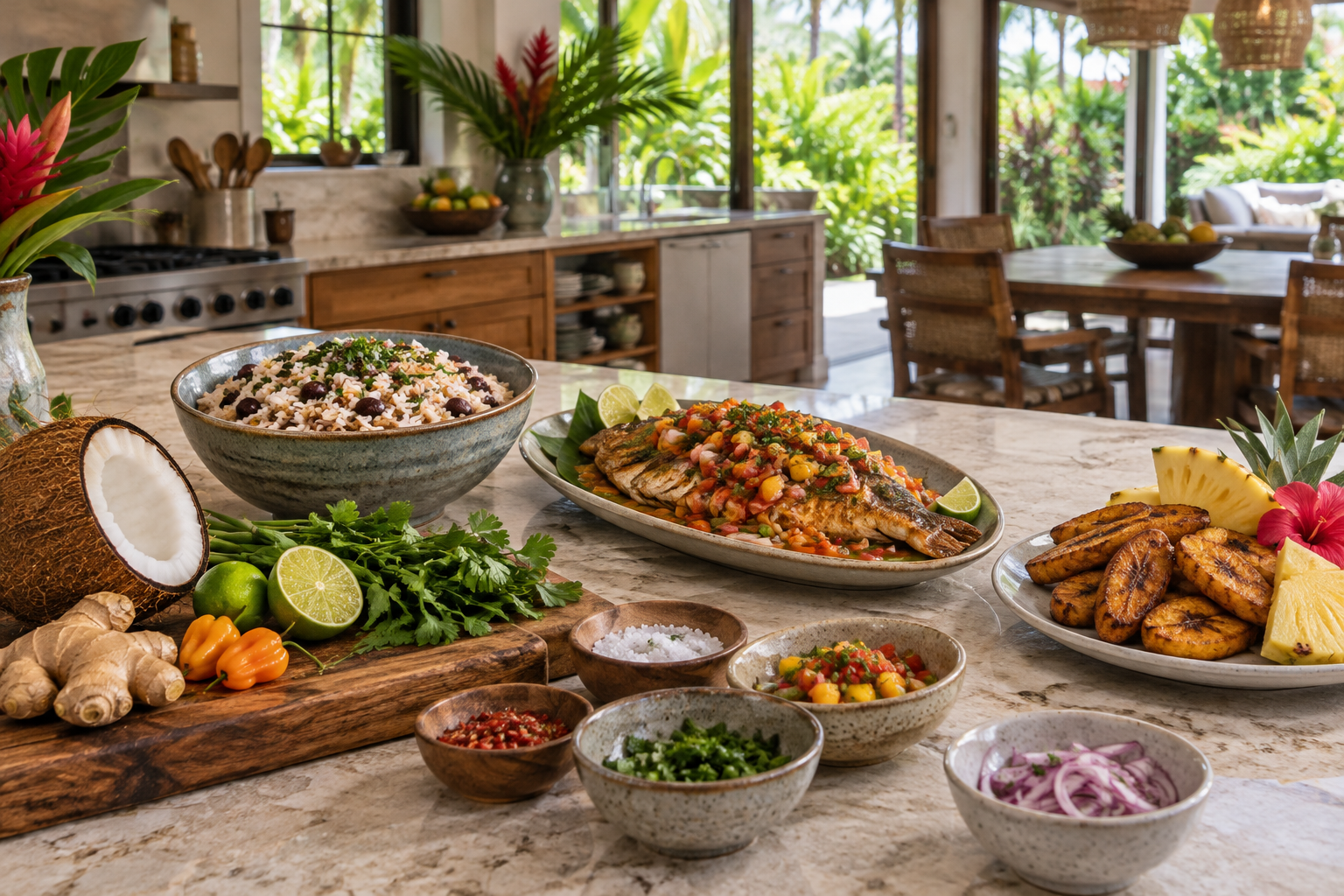
The best meals on the South Caribbean coast rarely begin at a restaurant table. They begin with ripe plantains on the counter, the fragrance of coconut and fresh herbs in the kitchen, and a chef explaining why each ingredient belongs in the dish. A Caribbean cooking class Puerto Viejo travelers can enjoy in their own villa turns an afternoon at home into a personal, hands-on introduction to the flavors of Costa Rica.
Rather than arranging transportation, coordinating a group reservation, or trying to recreate regional recipes after the trip, guests cook alongside a professional chef in the comfort of their vacation rental. The result is both a memorable meal and a practical piece of the coast to take home.
What Makes a Private Caribbean Cooking Class Different
A private class is not a demonstration staged for a large audience. It is a working kitchen experience shaped around your group, your pace, and the equipment available in your villa or Airbnb. Roberto arrives with the ingredients, guides the preparation, and keeps the experience relaxed enough for conversation, questions, and the occasional taste from the pan.
The class is designed around three Caribbean-inspired dishes over approximately four hours. Guests are invited into the process from the first preparation through plating, learning techniques that translate well beyond the vacation kitchen. Depending on the menu, that may mean handling plantains, balancing coconut richness with citrus, preparing fresh herbs and aromatics, or understanding how a simple sauce can bring tropical ingredients together.
There is value in seeing the full process rather than only receiving the finished plate. You learn which details matter, where you can adapt a recipe at home, and which ingredients are worth seeking out. At the same time, the class does not require anyone to arrive with culinary confidence. Couples who want a shared activity, families cooking together, and friend groups celebrating a special trip can all participate comfortably.
Caribbean Cooking Class Puerto Viejo: The Experience at Your Pace
The setting changes the feeling of the class. In a private villa, there is no rush to give up a table and no need to move the occasion elsewhere once cooking is complete. You can begin with a cool drink, cook at an unhurried pace, and sit down to the dishes you have prepared while the light shifts outside your own space.
This format is especially well suited to travelers staying in Puerto Viejo de Talamanca, Cocles, Playa Chiquita, Punta Uva, Manzanillo, or Cahuita. It gives a group a meaningful food experience without giving up an entire day to logistics. For a couple, it can become an intimate afternoon before an evening in. For a family, it gives everyone a role without turning the host into the person responsible for shopping, prep, and dishes.
Private Chef Puerto Viejo by Roberto approaches the class with the same attention given to a private dinner service. Roberto brings a fine-dining perspective to Costa Rican and Caribbean ingredients, while keeping the instruction personal and approachable. The point is not to make the cooking feel formal. It is to make each technique clear, each flavor intentional, and each guest welcome at the counter.
Three dishes, thoughtfully connected
A well-composed class is more satisfying than three unrelated recipes. The dishes are planned to create a natural progression in the kitchen and at the table, with ingredients and techniques that build on one another. Caribbean cooking can be bright and generous, but it also depends on balance: sweetness against acidity, gentle spice against creaminess, and familiar staples prepared with care.
Menus may be tailored to the season, market availability, and your preferences. That flexibility is useful, but it also means the exact dishes should be confirmed in advance rather than assumed. Fresh local products can shape the most compelling menu, and a considered adjustment is preferable to forcing an ingredient that is not at its best.
Instruction that feels natural, not scripted
Some guests want to chop, stir, season, and plate every course. Others prefer to take on a few key steps while enjoying the conversation and watching a professional rhythm at work. Both approaches can work. A private class has room for active cooks and curious observers at the same table.
Roberto explains the purpose behind each stage, from preparing ingredients efficiently to tasting before the final seasoning. Questions are encouraged throughout. The experience is designed to leave guests with usable recipes and a clearer understanding of the flavors, not a stack of notes that never make it into a home kitchen.
What Is Included in the Four-Hour Class
The experience is structured to feel complete from arrival through cleanup. Ingredients are included, as is chef-led instruction, the recipes from the class, and kitchen cleanup after the meal. That matters when you are on vacation: no sourcing unfamiliar products, no guessing at measurements, and no returning to a kitchen full of pans once lunch or dinner is finished.
Your accommodation still plays an important role. A functional, clean kitchen with appropriate work space, basic cooking equipment, and reliable access allows the class to run smoothly. Before confirming, it is wise to share details about the villa kitchen, guest count, location, and any access considerations. This helps ensure the menu and setup match the property rather than asking the property to perform like a professional restaurant kitchen.
For larger travel parties, a bespoke arrangement may be possible through direct consultation. The right format depends on how many people want hands-on participation, the size of the kitchen, and whether the group prefers a focused class or a broader chef-led food occasion. A compact kitchen can be ideal for four engaged cooks; a larger group may benefit from a more customized approach.
Dietary Preferences and Menu Planning
Advance planning is essential for dietary preferences. Share vegetarian requirements, ingredient dislikes, and other dietary needs when inquiring, so the menu can be thoughtfully considered before the chef arrives. A clear conversation early on creates a more enjoyable class and avoids last-minute substitutions that can compromise the intended dish.
Guests with serious allergies should communicate them in detail before booking. While every effort can be made to plan appropriately, a private kitchen may have unknown prior use and cannot be represented as allergy-free. This is one of the situations where specificity is more useful than a vague request: name the ingredient, the level of concern, and any cross-contact considerations your group follows.
How to Plan the Right Afternoon
Book the class well in advance, particularly for peak travel dates or larger groups. Private chef service is arranged by reservation, and availability depends on Roberto's schedule, travel time, ingredient planning, and the suitability of the kitchen. A 50% TiloPay deposit secures the booking, with the remaining details confirmed before service.
When you inquire, provide the dates you are considering, the address or area of your accommodation, guest count, kitchen photos if available, and dietary preferences. Also consider the rhythm of your day. A cooking class works beautifully after a morning at the beach, but it is best scheduled when guests have enough time to settle in rather than arriving hungry, sandy, and late from an excursion.
Choose this experience if you want more than a meal and less than a formal culinary course. It is a chance to cook slowly, eat well, and bring a few well-chosen Caribbean techniques into the meals you make long after your villa keys are returned.
Comments