Costa Rican Cooking Class in English at Your Villa

Updated: Oct 8

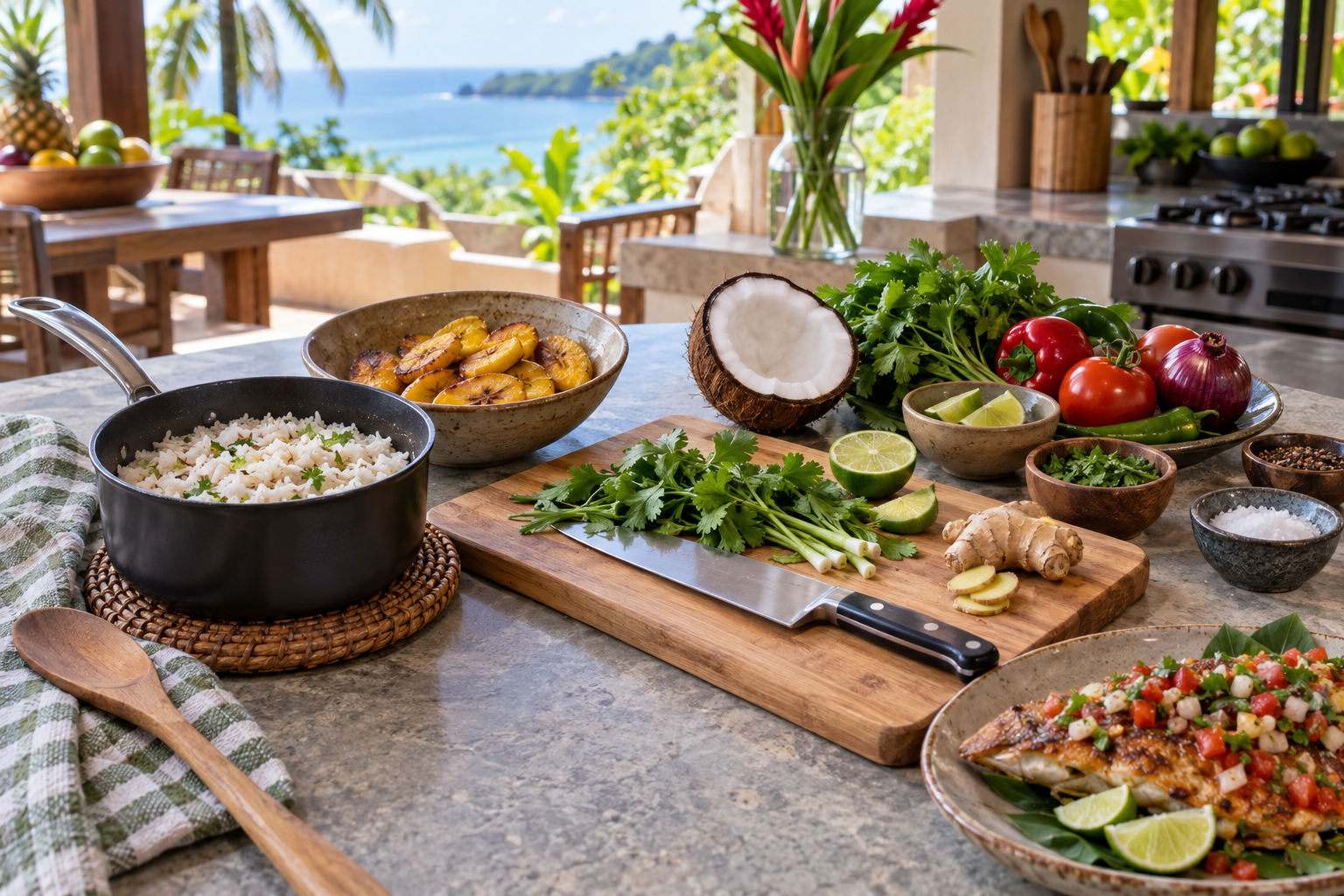
A Costa Rican cooking class in English should feel less like a scheduled activity and more like an evening that belongs to your vacation. The ingredients arrive at your villa, the kitchen fills with the fragrance of fresh herbs, citrus, coconut, and Caribbean spices, and you learn directly beside the chef who is preparing your meal. There is no crowded demonstration room, no need to arrange transportation, and no pressure to keep pace with strangers.
For travelers staying along Costa Rica’s South Caribbean coast, a private class brings the region’s cooking into focus with the comfort, privacy, and polish of an in-villa experience. It is a thoughtful choice for couples, families, and friends who want to take home more than photographs of a memorable dinner.
What Makes a Private Cooking Class Different
A hands-on class in your own vacation kitchen is built around participation, but it is not a test of technique. Roberto guides the experience in clear English, explaining the ingredients, methods, and flavor decisions as you cook together. You can ask the questions that rarely fit into a restaurant meal: why a sauce needs acidity, how to layer spice without overwhelming fresh seafood, or which local ingredient can be replaced once you are back home.
The pace is naturally personal. Some guests want to chop, season, stir, and plate every course. Others prefer to participate in the essential moments, then relax with a drink while the kitchen comes together. Both approaches suit the experience. The goal is a beautifully prepared meal and a confident understanding of the dishes, not a rushed performance.
This format is especially appealing after a beach day or a morning exploring the coast. Rather than changing for a reservation and organizing a ride, you return to your villa and let the evening unfold there. At the end, you sit down to the food you prepared with a chef, in a setting chosen by you.
A Costa Rican Cooking Class in English, Centered on Flavor
Costa Rican cuisine changes from region to region, and the South Caribbean has a distinct culinary character. Coconut, plantain, cassava, tropical fruit, fresh fish, aromatic herbs, and carefully balanced chile heat all have a place at the table. The cooking is generous and colorful, yet the best versions remain precise: richness needs brightness, spice needs depth, and a simple ingredient deserves careful handling.
A four-hour private class is designed around three Caribbean dishes. The menu can reflect the season, market availability, and your group’s preferences, rather than relying on a fixed script. One class may emphasize a coconut-based preparation with local vegetables and plantains; another may lean toward fresh fish, rice, and a vivid tropical accompaniment. That flexibility matters because truly good cooking starts with what is at its best.
Roberto’s fine-dining background at El Taller de Billy Sazon informs the details, from knife work and seasoning to the final presentation. The atmosphere, however, remains warm and approachable. This is refined Costa Rican cuisine without unnecessary formality: a chef-led lesson designed for travelers who appreciate good food and want to understand the place they are visiting through its ingredients.
What Is Included in the Experience
A private class removes the logistical work that can make cooking on vacation feel less relaxing. Ingredients are selected and brought to your accommodation, the meal is prepared in your kitchen, and the space is cleaned afterward. You are not left with grocery bags, a sink full of pans, or uncertainty about what to do next.
The experience includes chef service, the ingredients needed for the planned dishes, hands-on instruction in English, and recipes where relevant so you can revisit key preparations at home. Before the date, dietary preferences and restrictions can be discussed during planning. This allows the menu to be tailored thoughtfully, though guests with serious allergies should always share full details in advance so suitability can be assessed carefully.
Your kitchen does not need to resemble a professional restaurant, but it does need to be safe, clean, and functional. A workable cooktop, basic preparation space, refrigeration, water access, and appropriate cookware make the experience smoother. If you are unsure about your villa kitchen, it is best to ask before confirming. A few details and photos can help set realistic expectations.
Who Will Enjoy This Most
The class works particularly well for a couple celebrating an anniversary, a family looking for a meaningful shared activity, or a small group that values an intimate alternative to a busy restaurant. It also makes a strong first-night plan: you settle into the villa, enjoy an excellent meal, and begin the trip with a clearer taste of the region.
For larger groups, the right format depends on the accommodation, kitchen size, and desired level of hands-on participation. A group of friends may enjoy gathering around the island and taking turns with each step. A bigger party may prefer a chef-led cooking moment followed by a more relaxed, plated meal. There is no single correct arrangement. The best plan reflects the kitchen, the guest count, and whether the occasion is primarily educational, celebratory, or both.
Children can often enjoy the sensory side of the class, particularly mixing, seasoning, and tasting, but the activity should suit their age and the group’s comfort level around hot surfaces and knives. Mentioning this while planning helps shape a better experience for everyone.
How to Prepare for Your Class
The most useful preparation happens before the chef arrives. Share your villa location, the number of guests, dietary needs, and any special occasion you are marking. Let the chef know whether you want a more active lesson or a gentler, chef-led format. If there are ingredients you are especially eager to try, mention them early, while menu planning is still open.
On the day itself, keep the kitchen counters reasonably clear and make space in the refrigerator for fresh ingredients. Wear comfortable clothing and shoes suitable for cooking. You do not need to purchase specialty tools or stock the pantry in advance. The class is designed to bring the essential elements to you.
Advance booking is recommended, particularly during popular travel periods and for villas farther along the coast. Reservations are confirmed with a 50% TiloPay deposit, with the remaining details arranged before service. Early communication also gives more room to accommodate custom menus and kitchen considerations.
More Than a Meal to Remember
The value of a private cooking class is not only in learning a recipe. It is in understanding why a dish tastes the way it does: the coconut that softens a spice, the citrus that lifts a rich sauce, the plantain that brings sweetness and texture to the plate. Those details stay with you long after the vacation ends.
Private Chef Puerto Viejo by Roberto brings that knowledge into the place where you are staying, then leaves your kitchen restored once dinner is over. It is an intimate way to experience Caribbean Costa Rican cooking, with the time to taste, ask questions, and enjoy the meal without having to go anywhere afterward.
When the plates are cleared and the evening settles in, you may find that the most lasting souvenir is not a recipe card at all, but the confidence to recreate a small piece of Costa Rica at your own table.
Comments