How a Private Chef Seasonal Menu Sets the Table

Updated: Oct 24

A memorable villa dinner rarely begins with a single dish. It begins with the moment: a late-afternoon swim, a birthday toast on the terrace, a family arriving back from the beach hungry but unhurried. A private chef seasonal menu gives that moment a sense of place, using ingredients at their best and shaping the meal around the way you want to gather.
For guests staying along Costa Rica’s South Caribbean coast, seasonality is not a restaurant trend or a decorative phrase. It is a practical and delicious way to plan. Tropical fruit ripens with real character, local seafood availability changes, herbs and vegetables shift, and weather can influence whether a menu should feel bright and refreshing or more composed and comforting. The result is a dinner that belongs to your vacation rather than a standard menu transported into it.
What Makes a Private Chef Seasonal Menu Different?
A seasonal menu is guided by what is especially good now, but it should never feel restrictive. The best version balances the chef’s knowledge of current ingredients with the preferences, dietary requirements, and occasion of the people at the table.
For an intimate dinner for two, that may mean a carefully paced five-course experience with tropical acidity, pristine seafood, and a dessert that feels light after a warm day. For a family or group, it may mean generous shared elements alongside individually plated courses, with choices that welcome different appetites without losing the refinement of the meal.
This is where private dining has an advantage over a fixed restaurant menu. Your chef is planning for one table, in one home, on one particular day. The menu can take account of the villa kitchen, the timing of your evening, the age range of your guests, and whether the occasion calls for surprise or familiarity.
Seasonality is flavor, not limitation
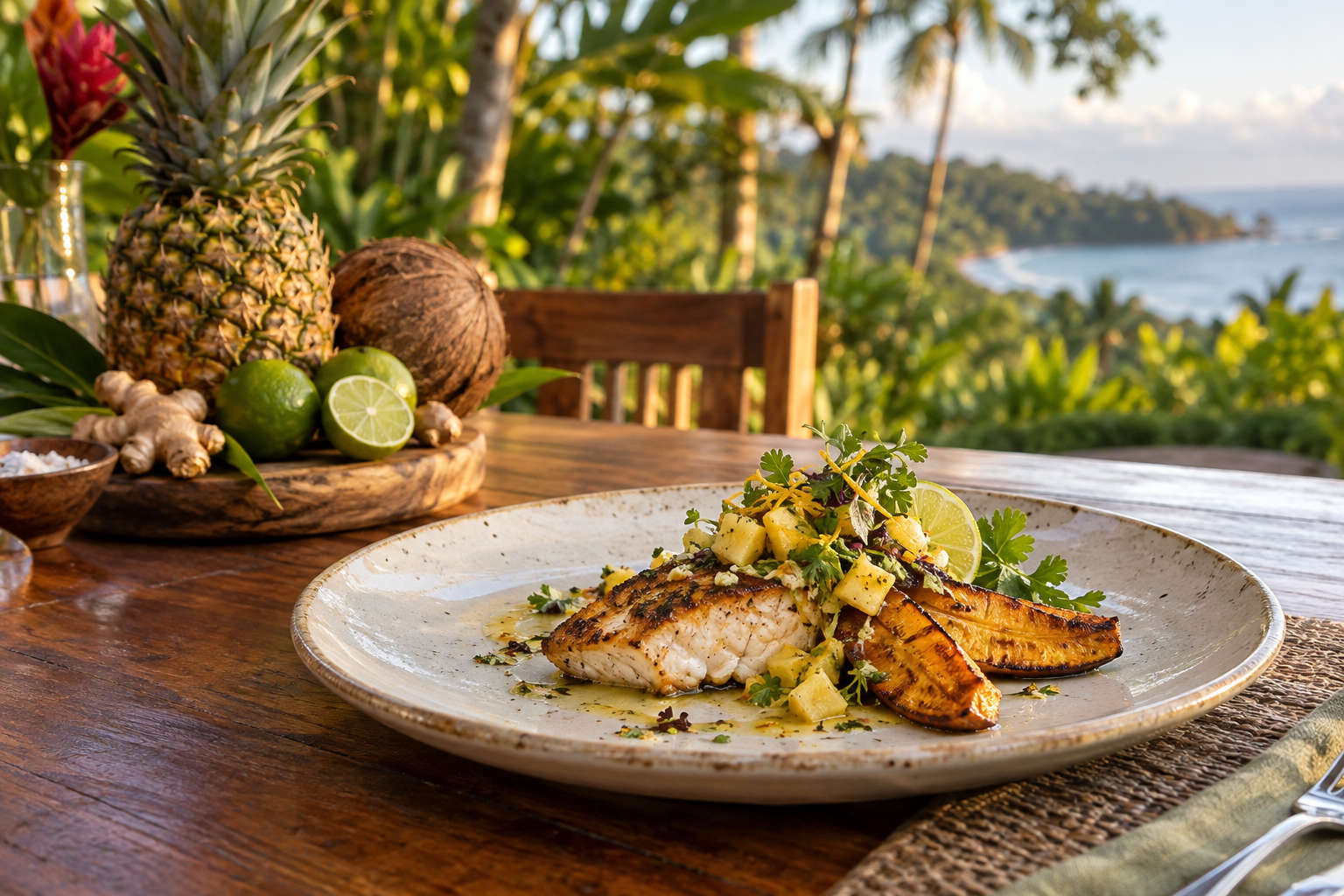
A menu built around seasonal ingredients does not mean every course must be unfamiliar. It means familiar pleasures can be treated with more care. A ripe pineapple may become a vivid counterpoint to savory elements. Plantain can bring richness and texture. Coconut, ginger, lime, chile, cacao, and fresh herbs can give Costa Rican and Caribbean dishes their depth without overwhelming the central ingredient.
The precise ingredients will depend on market quality and availability. That flexibility is part of the value. Rather than promising a dish that requires substitutions, a chef can select the strongest available produce and build a menu that tastes intentional from the first course to the last.
How the Menu Takes Shape Before Arrival
A refined meal in a vacation home depends on thoughtful planning long before the first pan is heated. The most useful menu conversations are specific: the number of guests, the occasion, dietary needs, food dislikes, preferred dinner time, and what kind of experience you envision.
Perhaps you want a tropical brunch before a day of exploring, followed by an early five-course dinner after time at the beach. Perhaps you are celebrating an anniversary and would prefer a quieter, more elegant progression of courses. A larger gathering may need a custom approach that keeps service polished while making everyone feel included.
At Private Chef Puerto Viejo by Roberto, this consultation also helps establish what the kitchen can comfortably support. Vacation villas vary widely. Counter space, refrigeration, cookware, ventilation, access, and dining setup all affect what is possible. Clear kitchen details allow the chef to plan intelligently and arrive prepared, rather than asking the host to manage logistics during their holiday.
Dietary needs deserve early conversation
A tailored menu can accommodate many dietary preferences when they are shared in advance. The earlier the information is provided, the more naturally it can be incorporated into the menu’s structure rather than treated as an afterthought.
That said, guests with severe allergies should communicate the nature and seriousness of the allergy clearly before booking. A private chef can take meaningful care with planning and preparation, but a villa kitchen is not a controlled allergen-free facility. Honest communication protects the experience and helps create the most appropriate menu for everyone at the table.
The Art of Pacing a Villa Dinner
Seasonal cooking is not only about the ingredient list. It is also about pacing. In a private villa, the meal should work with the rhythm of the evening rather than interrupt it.
A well-designed signature dinner often starts with a course that feels crisp and welcoming, followed by a more expressive preparation that introduces deeper Caribbean and Costa Rican flavors. The main course carries the greatest sense of occasion, while dessert provides a clean, satisfying finish. The portions, temperature, and sequence matter as much as the individual recipes.
This pacing is especially valuable in tropical weather. A heavy menu can feel out of step with a warm evening, while a meal that is too light may not satisfy after a full day outdoors. The right balance depends on the season, the time of service, and your group. A chef-led menu has room for that judgment.
There is also a social benefit. Unlike a crowded dining room, your table is yours. Conversations do not compete with another party. Children can settle into a familiar environment. Couples can linger. A group can move from the pool or garden to a fully prepared dinner without coordinating transportation, reservations, or a return trip after dessert.
Why Local Character Matters
Visitors often want more than a beautiful meal. They want a food experience that feels connected to where they are. A seasonal menu is one of the most respectful ways to create that connection because it begins with the region’s flavors rather than forcing an imported idea of luxury onto the table.
Contemporary Costa Rican cooking can be elegant without becoming distant. Caribbean influences bring brightness, warmth, and layers of spice. The goal is not to turn every course into a theme. It is to create a meal with a clear point of view: fine-dining technique, carefully chosen tropical ingredients, and a sense of generosity suited to private hospitality.
For guests who prefer a more hands-on introduction, a Caribbean cooking class offers another way to understand the ingredients. Preparing several dishes with a chef creates a different kind of memory, particularly for families and friends who want an activity as well as a meal. The best choice depends on your trip. A dinner is designed for being hosted; a class is designed for participating.
When a Seasonal Menu Is Worth Choosing
A private chef experience is particularly well suited to occasions when the setting matters as much as the food. Anniversaries, milestone birthdays, multigenerational vacations, reunion dinners, and the first night in a special villa all benefit from the ease of having a complete meal come to you.
It can also be the right choice when you simply do not want to spend an evening making decisions. The ingredients, preparation, service, recipes where relevant, and kitchen cleanup are handled as part of the experience. You are not left with a grocery list, a stack of dishes, or the task of transforming a vacation kitchen into a restaurant.
Advance reservation is essential, especially when your dates are fixed or your group requires a bespoke menu. Booking ahead creates the time needed to discuss your table, confirm kitchen suitability, organize ingredients, and shape a service that feels calm on the day itself. A deposit secures the date, while early communication gives the menu its best chance to be personal rather than merely customized.
The most satisfying seasonal menus do not try to prove how many ingredients a chef can source or how elaborate a plate can look. They make a clear promise instead: this meal was considered for this place, this season, and the people sitting down to enjoy it. When the final course is served and the kitchen is clean, your villa should feel less like a rental and more like the setting for an evening you will continue talking about long after the trip ends.
Comments