Private Chef Dietary Accommodations Explained

Updated: Oct 24

A villa dinner should feel personal from the first course, not like a compromise made around the table. Private chef dietary accommodations make that possible when they are discussed early and with enough detail for thoughtful menu planning. Whether a guest avoids gluten, follows a plant-based diet, has a serious allergy, or simply dislikes certain ingredients, clear communication allows the chef to create a refined meal that still feels generous, regional, and distinctly yours.
What Private Chef Dietary Accommodations Can Include
Dietary needs are rarely one-size-fits-all. Some guests are looking for a vegetarian menu that feels celebratory rather than repetitive. Others need to avoid dairy, gluten, shellfish, nuts, or specific ingredients because of an allergy or intolerance. A family may include children with different preferences, while a group of friends may have one vegan guest and several guests eager for fresh seafood.
A private chef service is especially well suited to these situations because the menu is planned around your group before the chef arrives. Instead of asking a restaurant kitchen to adjust a dish during a busy service, each course can be considered in advance: the ingredients, sauces, garnishes, preparation methods, and the balance of the full meal.
That flexibility has practical limits, and honesty is part of excellent hospitality. Some requested substitutions can change the structure of a dish or require ingredients that are not reliably available in the area. A strong chef will offer an appealing alternative rather than forcing a familiar menu into a version that does not deliver the same quality.
Start With Details, Not Labels
“Gluten-free” and “vegan” are useful starting points, but they do not always tell the full story. When making an inquiry, share every guest’s needs individually and explain whether the request is a preference, an intolerance, or a medically significant allergy. This gives the chef the context needed to plan responsibly.
For allergies, include the specific ingredient and the level of concern. A guest who cannot eat shrimp may also need to avoid dishes prepared with shellfish stock, while a guest avoiding dairy may be comfortable with clarified butter or may need every milk-derived ingredient excluded. Details such as these shape menu choices far more effectively than a general note added shortly before service.
It also helps to mention foods your group does not enjoy. That is not a dietary restriction, but it matters when the goal is an intimate dinner with courses everyone will look forward to. If cilantro, coconut, spicy chile, raw fish, or pork is off the table, say so early. Caribbean and Costa Rican ingredients can be introduced with care while keeping the menu aligned with your tastes.
A useful message to send when booking
Your chef can plan more precisely when you provide the guest count, the date and service style, each dietary requirement, any known allergies, ingredient dislikes, and whether children will be dining. If you are celebrating an anniversary, birthday, or family gathering, mention that as well. The occasion often helps determine whether a lighter tropical menu, a more formal five-course dinner, or a relaxed shared meal is the best fit.
Photos or links to a villa kitchen are also valuable when requested. Kitchen layout, refrigeration space, cookware, and access can affect how a menu is prepared and served. This is not about making guests manage the event. It is how a chef arrives prepared to provide restaurant-quality service in a private home.
How a Tailored Menu Stays True to the Experience
Dietary accommodation should not mean serving one “special” plate that feels separate from the rest of the table. Whenever possible, the most elegant approach is to design a cohesive menu with shared flavors and thoughtful variations. A bright tropical starter might be naturally plant-forward; a seafood course may be paired with an alternative preparation for a guest who does not eat fish; a dessert can be adapted without losing its sense of occasion.
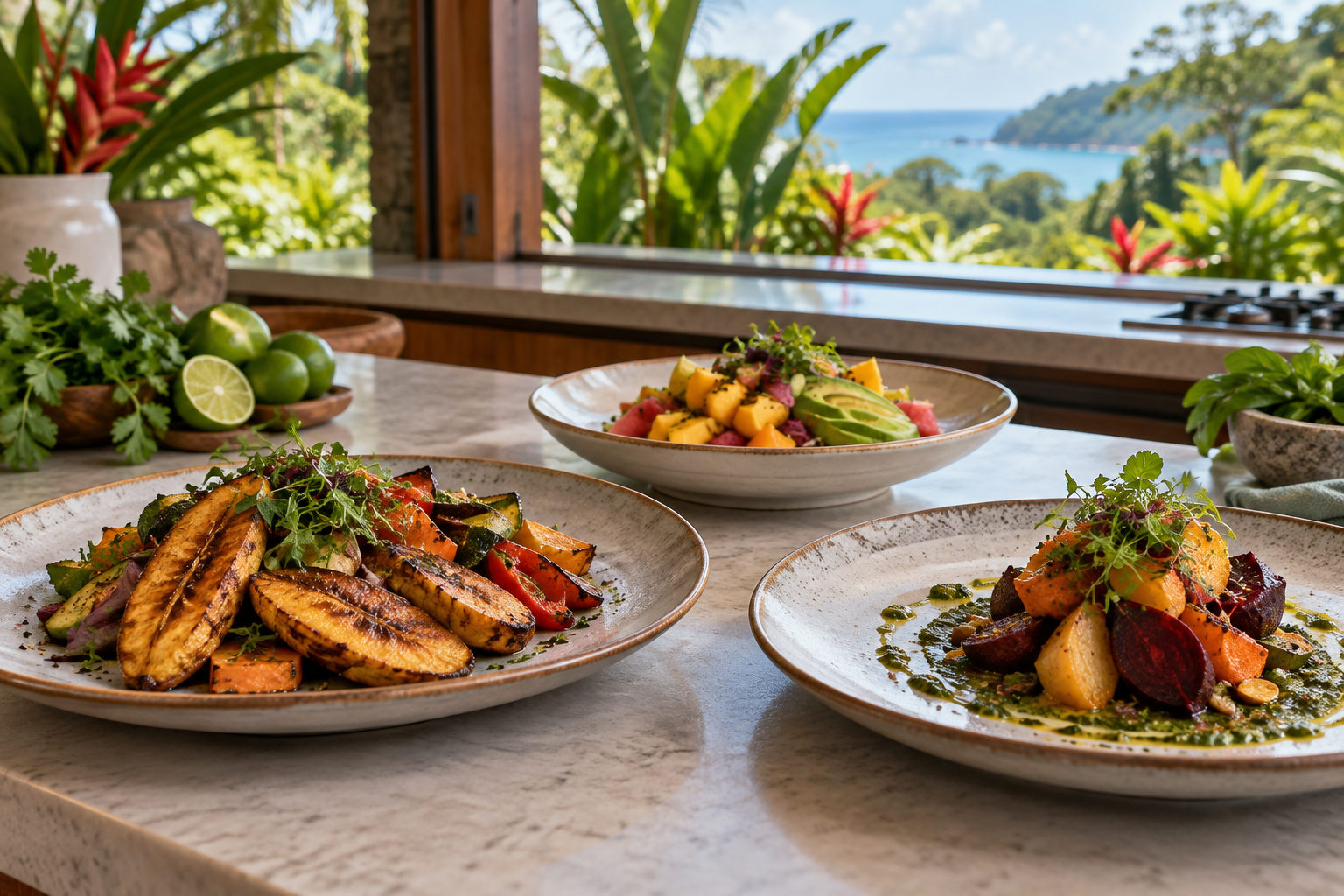
At Private Chef Puerto Viejo by Roberto, menu planning draws on refined Costa Rican cuisine and the ingredients of the South Caribbean coast. Seasonal fruit, plantains, root vegetables, herbs, local seafood, and aromatic sauces offer plenty of room for variety. The point is not to make every meal conventionally “healthy.” It is to create courses with depth, color, and a clear point of view while respecting the needs of the people enjoying them.
Some accommodations are naturally straightforward. A vegetarian brunch can be built around ripe fruit, house-made sauces, eggs where appropriate, plantain, vegetables, and warm breads. Others require more careful restructuring. Replacing a dairy-based element, for example, may affect texture, richness, and plating. Replacing a central protein in a five-course dinner changes more than one course. In those cases, a custom menu may be a better choice than a standard package with a long list of substitutions.
When allergies require additional planning
A chef can take meaningful precautions, but no responsible private chef should promise an allergy-free environment in a vacation-rental kitchen. Villas and Airbnbs may have cookware, cutting boards, pantry items, or surfaces with an unknown history. Cross-contact risks can also exist during ingredient sourcing and production.
For a severe allergy, disclose it before confirming the booking and ask directly what precautions are possible for your specific situation. The chef may recommend a menu that avoids higher-risk ingredients, bring dedicated tools where feasible, or advise that the accommodation is not suitable if the risk cannot be managed appropriately. That conversation is protective, not inconvenient. It gives everyone the information needed to make a confident decision.
Guests should also avoid assuming that a dish is suitable based only on its appearance. Sauces, marinades, stocks, and garnishes can contain ingredients that are not obvious at the table. Before dinner begins, confirm the final plan with the chef if an allergy is involved, particularly when there have been changes to the guest list or menu.
Timing Makes Better Accommodation Possible
The best time to share dietary information is when you first inquire, ideally before a menu is finalized and ingredients are purchased. Advance notice gives the chef time to source appropriate products, consider substitutions, and organize the kitchen workflow. It also prevents the uncomfortable moment when a guest arrives at the table to discover that a course cannot be enjoyed.
Last-minute requests can sometimes be accommodated, especially for preferences or simpler adjustments. Availability, travel time, and the complexity of the restriction all matter. A private dinner is meticulously planned, from shopping through cleanup, so earlier communication generally creates more choice and a more polished result.
This is particularly relevant for larger groups. A menu for eight to fifteen guests has a different rhythm than dinner for two, and multiple restrictions may require additional coordination. Share the full group’s needs in one message whenever possible. A single, complete list is easier to work from than several separate updates sent over several days.
Hosting With Confidence in Your Villa
Guests often book a private chef because they want the ease of a beautiful meal without transportation, reservations, or an evening spent cooking and cleaning. Dietary planning should support that ease. Once the menu has been agreed upon, you can focus on setting the table, opening a favorite bottle of wine, and enjoying your time together.
There is no need to apologize for asking questions or requesting an adjustment. Good private dining begins with listening. At the same time, remain open to the chef’s recommendations when a particular ingredient or preparation is not the best fit for your needs. The most memorable menus are collaborative: they reflect your group, while still leaving room for the chef’s experience and the flavors of the place.
A carefully planned meal does more than accommodate what guests cannot eat. It creates the pleasure of sitting down together and finding that every person at the table has been considered.
Comments