What Does Kitchen Cleanup Include for a Private Chef?

Updated: Oct 24
A private dinner should end with the last course, not with a sink full of glasses waiting for you after your guests leave. When travelers ask, “what does kitchen cleanup include?” they are usually asking a more personal question: will the villa still feel like a vacation home once the chef has gone?
For a well-managed private chef experience, cleanup is part of the hospitality, not an afterthought. The goal is to leave the working kitchen orderly, sanitary, and ready for you to enjoy the rest of your evening. That means the chef’s team handles the practical evidence of cooking while you remain at the table, on the terrace, or in the pool with your guests.
What Does Kitchen Cleanup Include?
Kitchen cleanup generally begins as the meal is being prepared. A professional chef does not wait until the final plate is served to organize the workspace. Used equipment is washed or set aside methodically, food packaging is consolidated, and surfaces are kept manageable throughout service.
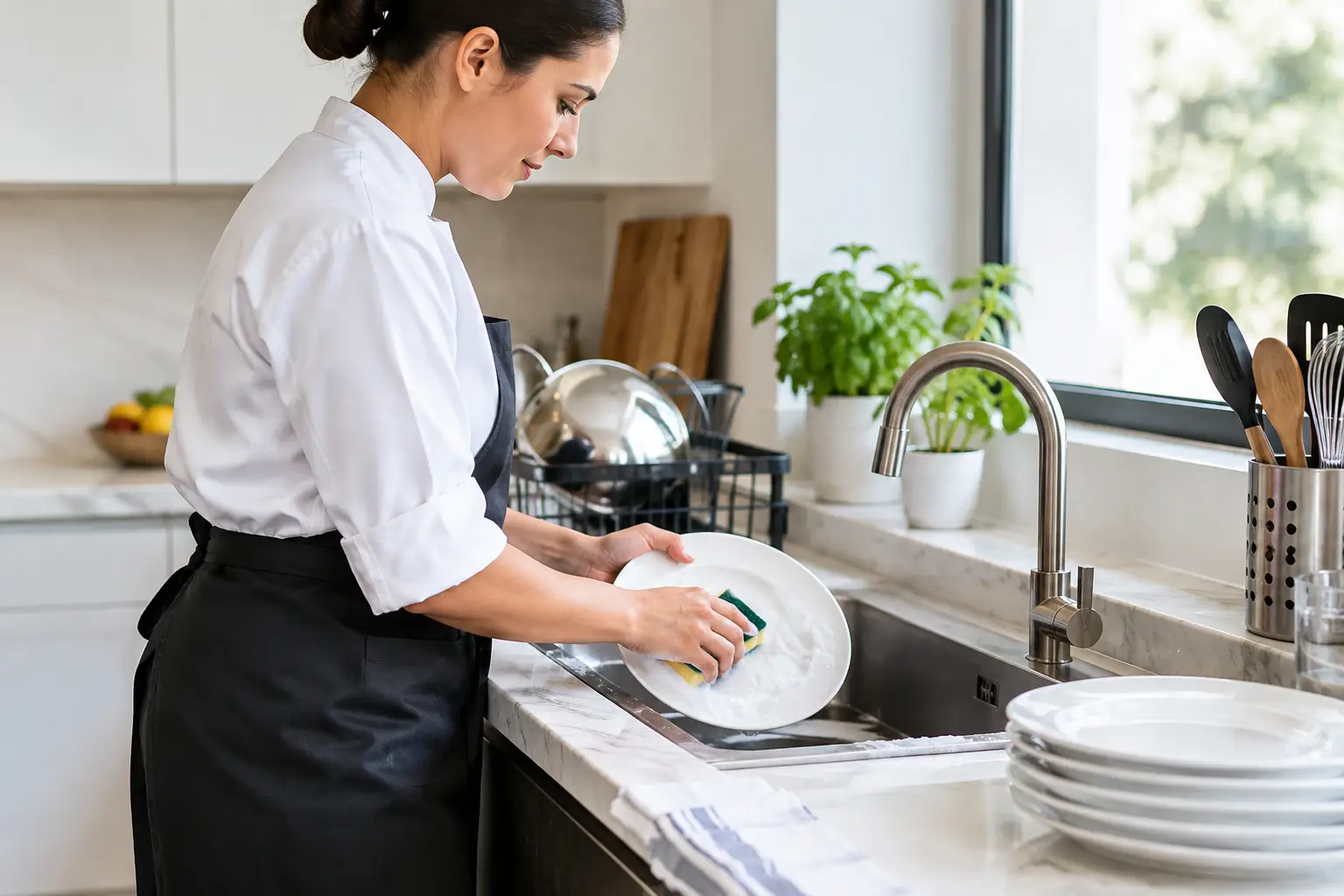
After dinner, the final cleanup usually includes washing the cookware, utensils, prep tools, serving pieces, and glasses used during the meal. Counters, stovetops, and primary prep surfaces are wiped down, while the sink area is cleaned and returned to a usable condition. The chef also removes food scraps, used packaging, and other meal-related waste according to the villa’s available trash and recycling setup.
The refrigerator is not forgotten. Ingredients brought for the menu are removed unless you have agreed otherwise, and any food intentionally left for you is stored neatly when appropriate. If a beautiful breakfast spread or a multi-course dinner creates leftovers, your chef can let you know what is suitable to save and how it should be stored.
For guests, the result should be simple: you walk back into a kitchen that feels calm and cared for, rather than like the backstage area of a dinner party.
The dishes, pans, and serviceware from your meal
A refined menu can require more equipment than is visible from the dining table. There may be sauté pans for a seafood course, blenders for a tropical sauce, boards for careful knife work, and platters for plating and serving. Cleanup includes the equipment used to produce and present your meal, whether it belongs to the chef or is drawn from the villa kitchen.
In many vacation rentals, the dishwasher may be small, unavailable, or slower than hand-washing. A chef will work with the kitchen provided and select the most practical method. Some items may be hand-washed and dried; others may be loaded into the dishwasher if that is the property’s normal preference and the cycle can run without disrupting your evening.
Cooking surfaces and the immediate work area
Cleanup also covers the areas directly affected by preparation and service. This commonly means wiping counters, cleaning the stovetop, rinsing the sink, and tidying the dining area where food was served. The chef will sweep up obvious food debris created during cooking when needed, especially in a busy villa kitchen where several courses have been prepared.
There is a useful distinction here. Private chef cleanup restores the kitchen after the culinary service. It is not the same as a full-property housekeeping visit. Deep-cleaning an oven, polishing all cabinetry, washing floors throughout the villa, or addressing existing stains and clutter usually falls outside the scope of a dinner service.
That distinction protects both the guest and the chef. You know what to expect, and the chef can devote proper attention to the meal, service, and safe restoration of the working space.
What a Private Chef Cleanup Does Not Usually Include
Most chefs arrive at a vacation rental expecting a reasonably clean, functional kitchen. The space does not need to look like a commercial restaurant, but it should have clear counters, running water, basic cookware, usable refrigeration, and enough room to prepare food safely.
Cleanup does not normally include washing dishes that were already in the sink before the chef arrived or reorganizing a kitchen that has accumulated several days of vacation living. It also does not extend to personal laundry, bedrooms, bathrooms, or outdoor spaces unrelated to the meal.
The same applies to structural or maintenance issues. If a faucet leaks, the refrigerator is not cooling, the stove will not ignite, or the property has a pest concern, those are matters for the host or property manager. A thoughtful chef can adapt where possible, but advance notice makes a meaningful difference.
If you are planning a large birthday dinner, a long brunch, or a villa-chef day with several distinct meal moments, ask in advance how cleanup is handled between services. The answer may depend on the kitchen layout, guest count, staffing, and whether the experience includes table service or multiple courses.
Why Cleanup Matters in a Vacation Villa
The luxury of a private chef is not simply that someone cooks for you. It is the rare pleasure of staying exactly where you are while a restaurant-quality meal takes shape around you. You enjoy the aroma of Caribbean ingredients, the pace of a carefully plated dinner, and the intimacy of dining at your own table without needing to navigate reservations, transportation, or a crowded restaurant.
Cleanup completes that experience. It allows a couple to linger over dessert instead of negotiating who will wash the pans. It gives a family more time together after a celebration. For a group staying in a villa near Puerto Viejo, it can make the difference between hosting a dinner and truly being hosted.
At Private Chef Puerto Viejo by Roberto, kitchen cleanup is included as part of the managed dining experience. Roberto brings the discipline of fine-dining preparation into the more relaxed setting of a private home, with attention to both the food on the plate and the condition of the kitchen after service.
How Guests Can Help Without Doing the Work
You should not need to clean before or after a private chef arrives, but a few details help the service run smoothly. Before the appointment, make space in the refrigerator for ingredients, clear a section of counter for prep, and ensure the chef can access the kitchen at the agreed time. If your villa has particular rules for trash, recycling, water use, or dishwasher operation, share them before the service begins.
It is also helpful to mention the available equipment. A quick note about the stove, oven, grill, blender, ice maker, or dishwasher allows the chef to plan intelligently. In some South Caribbean properties, kitchens vary widely, from fully equipped modern villas to beautiful open-air spaces with a more limited setup. Neither is a problem when expectations are clear.
During the meal, relax. You are welcome to spend time in the kitchen if you enjoy seeing the preparation, but there is no expectation that you will clear plates, wash glasses, or manage waste. If you would like leftovers packed a particular way, simply say so before the chef begins the final cleanup.
Questions Worth Asking Before You Book
A clear package should state whether ingredients, chef service, tableware, and kitchen cleanup are included. If any detail is unclear, ask whether cleanup covers the dishes and cookware from the meal, how leftovers will be handled, and whether the chef takes away meal-related waste or uses the property’s bins.
For larger groups, ask about service timing. A dinner for two may allow for a quiet, swift close to the evening, while a custom gathering for 10 to 15 guests can involve more glassware, more shared platters, and a longer reset of the kitchen. The standard remains the same, but the practical scope naturally grows with the event.
A good private chef service leaves more than a memorable meal behind. It leaves you free to enjoy the villa exactly as you intended: unhurried, well fed, and without a kitchen waiting for your attention.
Comments