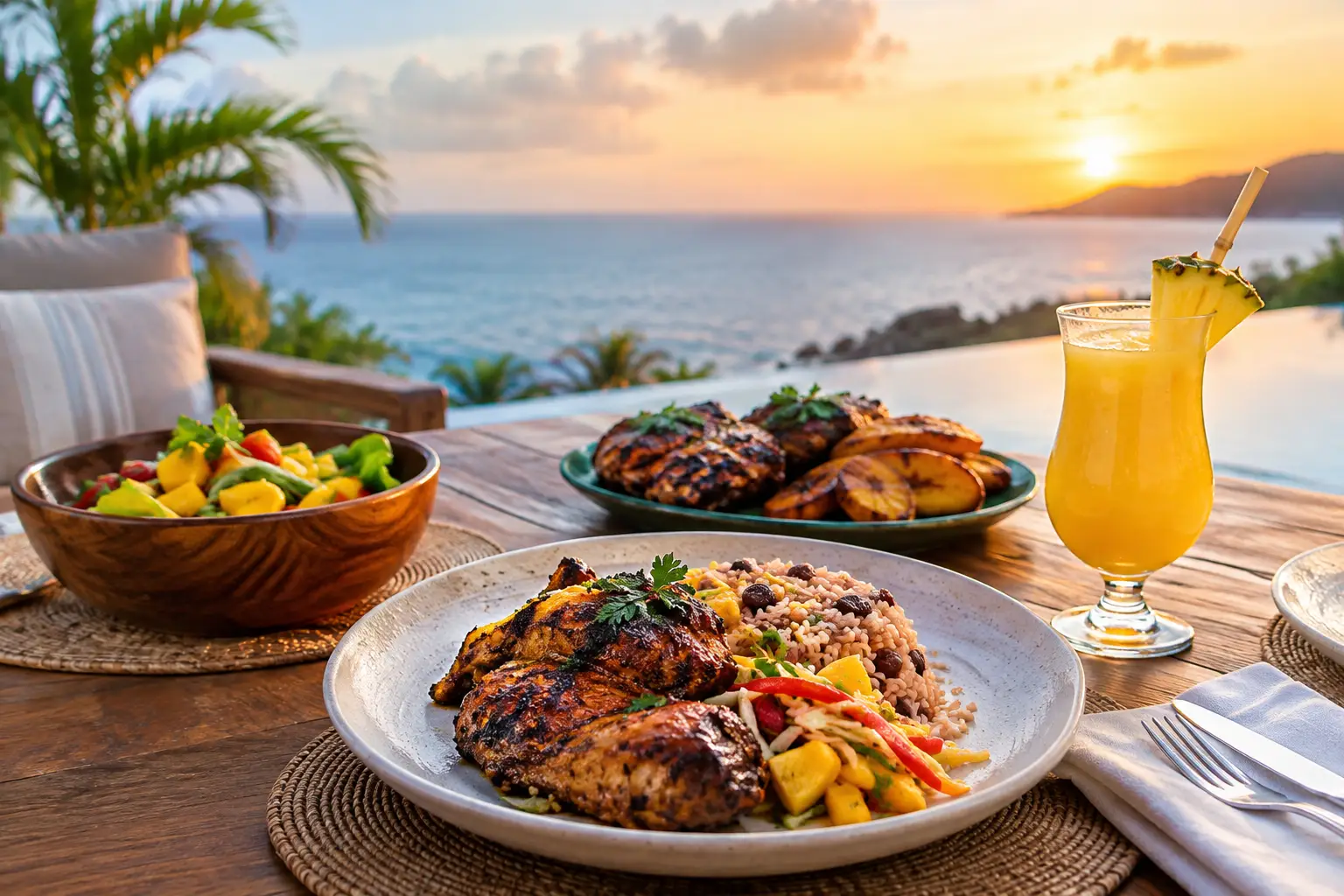
Caribbean Cuisine for a Memorable Villa Dinner

A proper Caribbean meal has a way of changing the pace of an evening. The scent of coconut warming in a pan, fresh herbs being chopped just before service, and a table set in the comfort of your villa create an experience that feels far more personal than dinner reservations. Caribbean cuisine is not one fixed menu or a single flavor profile. It is a generous, evolving collection of cooking traditions shaped by place, season, family, and the ingredients that grow near the coast.
For guests staying on Costa Rica's South Caribbean coast, it offers an especially fitting way to eat. The region's cooking brings together tropical produce, fragrant spices, seafood, slow-cooked sauces, and the relaxed generosity of a table meant to be shared. When it is prepared thoughtfully in your own kitchen, the meal becomes part of the stay rather than another item on an itinerary.
Caribbean Cuisine Is Rooted in Place
The Caribbean spans many islands and coastal regions, each with its own culinary identity. Jamaican jerk, Trinidadian curries, Dominican stews, Cuban roast pork, and the coconut-rich dishes of Costa Rica's Caribbean coast may share certain ingredients, but they should not be treated as interchangeable. A skilled menu begins with that distinction.
On the South Caribbean coast of Costa Rica, cooking often reflects the abundance of the landscape. Coconut milk, ripe plantains, cassava, yuca, rice, beans, fresh ginger, chile, citrus, and local fish can all have a natural place at the table. The best preparations allow those ingredients to remain recognizable. Heat may be present, but it is rarely the only point. Acidity, sweetness, smoke, herbs, and texture give a dish its balance.
That balance is what makes Caribbean food so well suited to refined private dining. A crisp plantain element can bring contrast to a tender fish course. A coconut sauce can be rich without feeling heavy when lifted by lime or herbs. A tropical fruit dessert can close a five-course dinner with freshness rather than excess.
The Ingredients That Give Caribbean Food Its Character
Caribbean cooking can appear simple on the plate, but it rewards precision. Coconut, for example, can be creamy and mellow, while a slightly over-reduced coconut sauce can overwhelm a delicate protein. Plantains must be selected according to their intended use: green for a firmer, savory preparation; yellow or deeply ripe for sweetness and softness. Citrus needs to be added with restraint so it brightens rather than dominates.
A memorable Caribbean menu often moves between familiar and unexpected notes. There may be the clean salinity of fresh fish, the earthy sweetness of root vegetables, a warm spice blend, and the perfume of cilantro, culantro, or basil. These ingredients are approachable, yet their arrangement can feel special enough for an anniversary, a family dinner, or the first evening of a long-awaited villa stay.
The pleasure is also in the contrast. A composed appetizer may be light and citrus-forward. A main course can introduce deeper roasted or braised flavors. By dessert, tropical fruit, coconut, cacao, or a delicate spice can bring the meal back to the region without repeating what came before.
Spice Is About Dimension, Not Just Heat
Visitors sometimes assume Caribbean cuisine means an aggressively spicy meal. In reality, spice is highly personal, and the right level depends on the dish and the guests at the table. Chile can add warmth, fruitiness, and aroma without making every bite hot.
For a private dinner, this is one of the advantages of speaking directly with a chef before the meal. A couple that enjoys gentle heat may want a bright pepper sauce served alongside the main course. A group with adventurous tastes may prefer a more assertive chile element. The menu can remain true to its Caribbean character while respecting individual preferences.
Why Caribbean Cuisine Works So Well in a Private Villa
A restaurant meal offers energy and atmosphere, but private dining offers something different: time. There is no need to arrange transportation after sunset, monitor a reservation, or rush through the final course because another table is waiting. You can begin with drinks on the terrace, linger over an appetizer, and let dinner unfold at the rhythm of your own group.
This setting also allows the cooking to feel immediate. Sauces are finished just before they are served. Fish is prepared at the point when it will be at its best. Tropical ingredients arrive at the table in dishes built around freshness rather than long holding times. For guests who value food as part of cultural experience, that proximity matters.
A private chef service also gives more room for thoughtful adjustments. Dietary needs, ingredient dislikes, children's preferences, and celebratory details can be discussed ahead of time. No kitchen can responsibly promise an allergen-free environment without proper information and controls, but clear advance communication allows a chef to plan with care and advise on what is realistic.
At Private Chef Puerto Viejo by Roberto, this approach is shaped by fine-dining technique and a respect for local ingredients. The aim is not to recreate a generic resort menu. It is to create a composed, restaurant-quality meal that belongs naturally in a South Caribbean villa setting.
A Well-Composed Caribbean Dinner Has a Rhythm
The strongest private menus do not place every regional ingredient into every course. They create progression. A tropical brunch may lean toward fruit, eggs, fresh breads, and bright juices, while an evening menu can carry more depth through seared seafood, slow-cooked accompaniments, or refined Costa Rican preparations.
For a five-course dinner, the first course should invite the appetite without asking too much of it. A second course may introduce texture or a more concentrated flavor. The main course becomes the anchor, supported by a starch or vegetable preparation that feels intentional rather than incidental. Dessert should offer a graceful finish, not simply more sweetness.
This is where a chef's training makes a visible difference. Caribbean ingredients are compelling on their own, but technique determines whether a dish feels balanced, polished, and appropriate for a special occasion. The goal is never to make food fussy. It is to make each course feel considered.
Freshness Depends on the Season and the Market
A menu centered on tropical ingredients should have room to change. The best available fish, fruit, herbs, and vegetables can vary from one week to the next. That is not a limitation. It is part of what keeps a private meal connected to its setting.
Guests who have a particular dish in mind should share it during the planning process, but flexibility often leads to the better result. A chef may recommend a different fruit at peak ripeness, a locally available fish better suited to the preparation, or a vegetable that gives the menu more balance. The final plate should reflect both the occasion and what is genuinely excellent at that moment.
Planning the Experience Before the First Course
A relaxed dinner depends on careful planning before the chef arrives. For villa and Airbnb guests, that means confirming the kitchen setup, guest count, preferred dining time, dietary information, and property access in advance. A suitable work surface, basic cooking equipment, and clear arrival details allow service to remain focused and composed.
It also helps to think about the feeling you want from the evening. An intimate dinner for two may call for a slower, more romantic progression. A family gathering may benefit from familiar elements alongside more adventurous courses. For groups, the best menu is often one that gives guests a sense of occasion while staying comfortable to eat and easy to share.
Cleanup is part of the experience as well. The pleasure of an in-villa dinner is diminished if guests are left with a crowded kitchen after the final plate. A fully managed service should leave the space orderly, allowing you to return to conversation, a final drink, or the sound of the evening outside.
Caribbean cuisine is at its most memorable when it is treated with both warmth and attention. Choose a meal that reflects the region, trust the season, and give yourselves enough time at the table to enjoy every course.
Comments