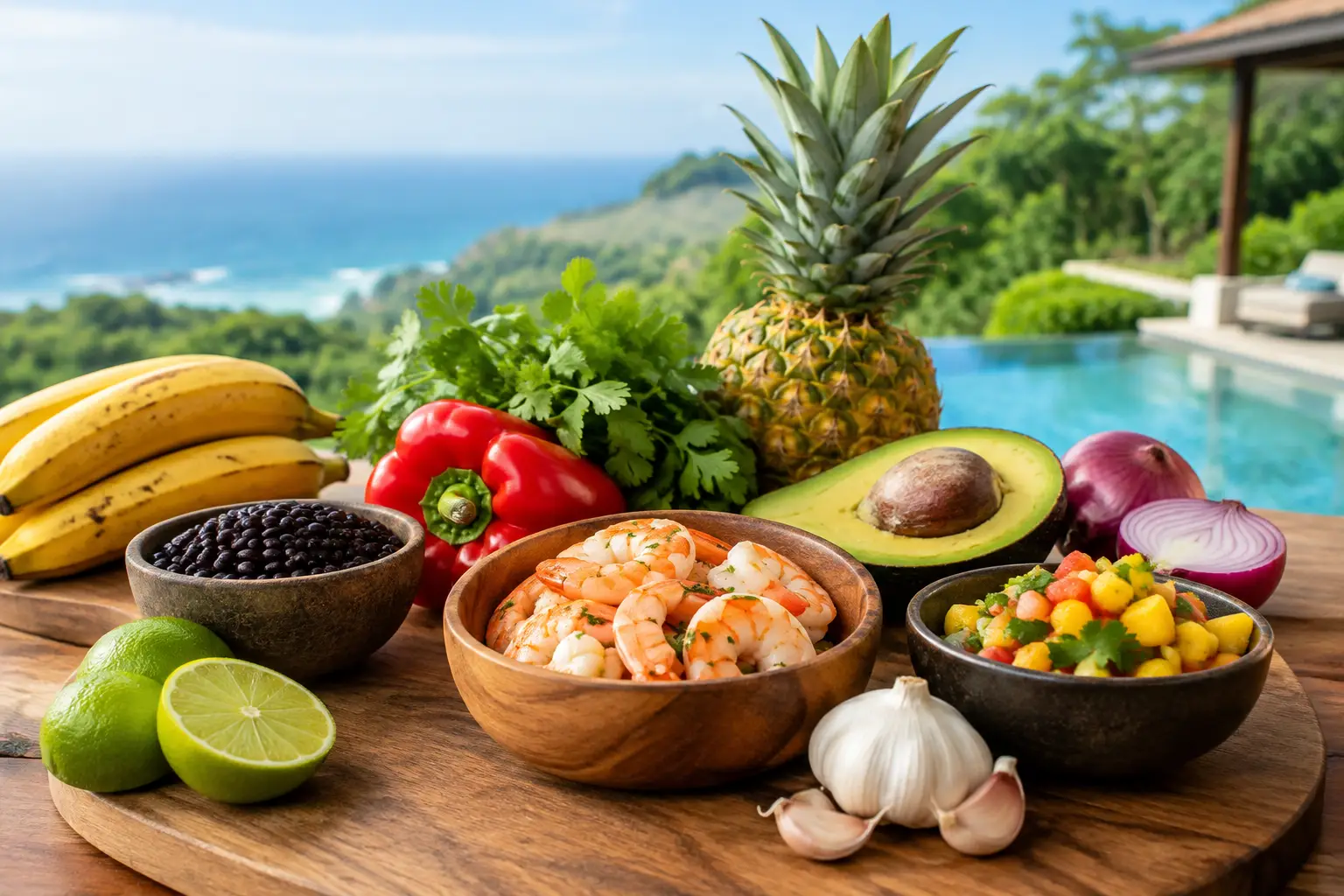
Costa Rican Ingredient Pairing Guide for Villas

A great villa meal on Costa Rica’s South Caribbean coast often begins with one decision: whether to let a single local ingredient lead the plate. This Costa Rican ingredient pairing guide is designed for guests who want food that feels rooted in place, but still composed with the balance and restraint of a refined private dinner.
The region offers abundant flavor - sweet plantains, bright citrus, fresh herbs, coconut, cacao, ginger, seafood, and deeply savory roots. The aim is not to place every tropical ingredient on one plate. It is to understand which flavors give one another clarity, contrast, and depth.
Start with balance, not abundance
Costa Rican and Caribbean cooking is often recognized for generous color and warmth, but the most memorable pairings are carefully paced. A rich ingredient needs lift. A delicate fish needs a seasoning that supports rather than overwhelms it. Sweet fruit becomes more interesting when paired with acidity, heat, salt, or a roasted element.
When planning a menu for a private villa dinner, think in three directions: richness, brightness, and texture. Coconut milk, avocado, and plantain bring softness. Lime, passion fruit, and pineapple contribute acidity. Toasted cacao nibs, cassava, seeds, or crisp fried plantain add contrast. A plate does not need all three in equal measure, but it usually benefits from at least two.
This approach also keeps a multi-course meal from becoming too heavy. A coconut-forward starter can be followed by a citrus-led fish course, while a richer plantain or cacao element belongs later in the meal.
Costa Rican ingredient pairing guide: the essential combinations
Fresh seafood with citrus, coconut, and herbs
Fresh fish and shrimp are especially well suited to the flavors of the Caribbean coast. The best pairing depends on the preparation. For a clean, quickly cooked fillet, lime and culantro offer a direct, aromatic finish. Culantro has a stronger, more grounded character than cilantro, so use it thoughtfully rather than treating it as a garnish.
For a more luxurious preparation, pair seafood with coconut milk, ginger, and a measured touch of chile. Coconut rounds out the heat while ginger brings perfume and freshness. Add lime at the end rather than early in cooking to preserve its sharp, vivid quality.
Pineapple and mango can work beautifully with seafood, particularly in a salsa or lightly dressed salad. The trade-off is sweetness: ripe fruit needs salt, chile, or citrus to avoid making the dish feel like a dessert course. A grilled shrimp with pineapple, lime, and a small amount of habanero is lively. The same pineapple folded into a heavy cream sauce would lose the tropical precision that makes it appealing.
Plantains with savory depth and gentle heat
Plantains are one of the most versatile ingredients on a Costa Rican table, but their stage of ripeness changes the pairing completely. Green plantains are starchy and restrained. They work well as crisp patacones alongside ceviche, bean preparations, avocado, or slow-cooked meats. Their neutral crunch provides structure where a softer dish needs it.
Ripe plantains are naturally sweet, caramelized when cooked, and best treated as a counterpoint to savory elements. Pair them with pork, black beans, tangy cheese, or a chile-lime glaze. They can also sit beside coconut-based sauces, though both ingredients are rich. In that case, a sharp herb salad or pickled onion is useful to keep the course focused.
For an intimate dinner, ripe plantain can become a polished garnish rather than a side dish. A small, well-seared portion beside a savory protein gives the plate warmth without turning it overly sweet.
Coconut with chile, ginger, and acidity
Coconut appears across South Caribbean cooking in several forms: fresh flesh, milk, cream, oil, and toasted flakes. Its flavor is generous and mellow, which is precisely why it needs definition around it.
Coconut milk pairs naturally with ginger, garlic, scallion, culantro, and chile. This combination is ideal for soups, seafood stews, rice, and sauces. Lime is the critical finishing note. Without it, coconut-based dishes can feel broad and heavy, particularly in warm weather.
Coconut also has a natural affinity for roasted squash, sweet potato, and cassava. These are satisfying pairings for a vegetarian course, but they should include an acidic element such as tamarind, lime, or pickled vegetables. Rich ingredients layered together can be comforting, yet a private dinner menu benefits from contrast and lift.
Cacao with fruit, salt, and smoke
Costa Rican cacao deserves more imagination than a final chocolate dessert alone. Its bitter, earthy character can give both sweet and savory dishes a sophisticated edge. Cacao nibs add crunch and a roasted note to fruit desserts, while cocoa can deepen a sauce for pork, duck, or mushrooms when used with a light hand.
For dessert, pair dark chocolate or cacao with passion fruit, banana, orange, or coffee. Passion fruit is particularly effective because its tartness cuts through chocolate’s richness. A touch of sea salt or toasted coconut can bring the flavors into sharper focus.
In savory cooking, cacao is best used as a background note, not the headline. It works with chile, warm spices, and charred vegetables, but too much turns a sauce muddy. The goal is a quiet bitterness that makes the main ingredient taste more complete.
Roots and beans with bright garnishes
Cassava, ñampí, taro, sweet potato, and black beans offer the comfort and substance that make a tropical menu feel generous. They are also relatively subtle, so the pairing around them matters.
Cassava works well fried, mashed, or simmered, especially beside citrusy seafood, braised meats, or a coconut sauce. Its mild flavor welcomes garlic and herbs, but it needs enough seasoning to avoid tasting flat. Black beans, meanwhile, gain character from onion, sweet pepper, garlic, and herbs. Serve them with avocado, ripe plantain, or a fresh tomato preparation for a balanced contrast of creamy, sweet, and bright flavors.
Pickled vegetables are particularly useful with roots and beans. They bring acidity and crunch without requiring a complicated sauce, and they can make a composed plate feel lighter in the Puerto Viejo heat.
Build courses that change the mood of the meal
A successful pairing is not only about what sits together on one plate. It is also about how each course prepares the palate for the next. For a five-course dinner, begin with freshness: perhaps a citrus-led seafood bite or a crisp green plantain base with avocado. Follow with a warm coconut or root vegetable course, then bring in the most substantial protein course.
Reserve ripe plantain, cacao, or a fuller-bodied sauce for later. Dessert should feel like a release, not another layer of richness. Passion fruit, chilled coconut, fresh pineapple, or a dark chocolate element with fruit can close the menu with the right amount of contrast.
This sequence is especially valuable for guests who enjoy local ingredients but may not be accustomed to their intensity. Caribbean chile, culantro, ginger, and coconut can all be adjusted to personal preference without losing the identity of the dish.
Pair for the setting as carefully as the menu
A beachfront lunch, a celebratory villa dinner, and a hands-on cooking class call for different combinations. At lunch, favor lime, herbs, fruit, grilled seafood, and crisp textures. Heat and richness feel more appropriate in the evening, when a coconut sauce, roasted roots, or plantain accompaniment can be enjoyed at a slower pace.
For families or mixed groups, it is often wise to keep heat controlled in the main preparation and offer chile as an optional finishing element. Dietary needs also shape the best pairing. Coconut is useful for many dairy-free dishes, but it is not automatically the right substitute in every recipe. Likewise, fish, shellfish, nuts, and gluten-containing sauces require advance discussion and careful kitchen planning. A thoughtful menu is tailored rather than assumed.
At Private Chef Puerto Viejo by Roberto, ingredient pairing begins with the menu conversation: the season, the occasion, the villa kitchen, and the preferences of each guest. That preparation makes it possible to create food that feels personal instead of simply tropical.
When choosing your own Costa Rican pairings, start with one ingredient you are excited to taste at its best, then give it a partner that adds contrast. A squeeze of lime, a pinch of salt, a spoonful of coconut, or a crisp plantain can be enough to turn a beautiful local product into a memorable course.
Comments