Home Chef Versus Catering for a Villa Dinner

A beautiful villa can make an ordinary dinner reservation feel like the wrong setting. After a day at the beach, a long table on the terrace, a thoughtfully prepared meal, and nowhere else to be can be far more appealing. When weighing home chef versus catering, the real question is not simply who provides the food. It is what kind of evening you want your group to remember.
For travelers staying in a private home, both options can solve the practical challenge of feeding a group well. Yet they create very different experiences. Catering is often built around efficient delivery or event service. A private chef turns your villa kitchen and dining space into a personal, chef-led occasion, with the preparation, pacing, and final cleanup handled around your plans.
Home Chef Versus Catering: The Essential Difference
Catering generally begins with a menu chosen in advance, food prepared off-site or in a production kitchen, and a defined delivery or service arrangement. It can be a sensible choice for a straightforward gathering, particularly when the priority is serving a large number of people at a specific time. Depending on the provider, dishes may arrive ready to set out, require reheating, or be served by an event team.
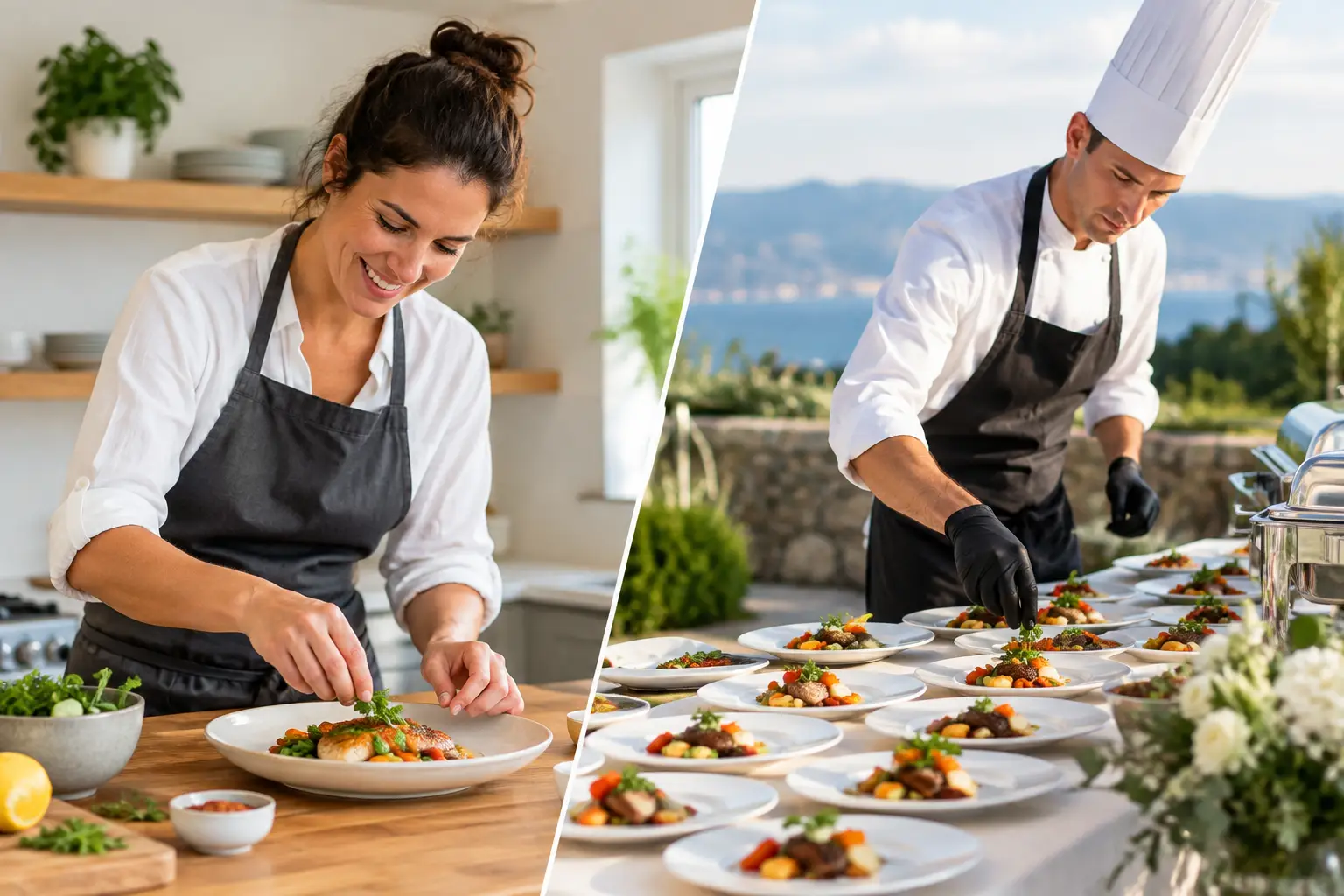
A home chef, often described as a private chef for the evening, works within your accommodation. The chef arrives with ingredients, prepares the meal in your kitchen, plates each course, and shapes service around your group. The difference is felt in the details: the aroma of tropical ingredients cooking just before dinner, a course held until everyone has returned from the pool, or a menu adjusted for the guest who prefers fresh fish over meat.
Neither format is universally better. Catering can be practical for a casual, high-volume function with a simple food plan. A private chef is usually the stronger fit when the meal itself is part of the occasion - a honeymoon dinner, milestone birthday, family night, or an unhurried first evening in a villa.
The Experience: A Delivered Meal or a Hosted Dinner
A catered meal can be enjoyable and beautifully presented, but it may still ask the host to take on small responsibilities. Someone may need to coordinate arrival, clear space for trays, find serving utensils, manage timing, or decide what happens when guests linger over appetizers. Those tasks are manageable, but they can interrupt the person who organized the evening.
With a private chef, the service is designed to remove that role from the host. Roberto plans the flow from kitchen arrival through final cleanup, allowing guests to stay at the table rather than move between the kitchen and dining area. For a signature dinner, this may mean several plated courses with a natural rhythm rather than a meal served all at once.
This distinction matters especially in vacation rentals. Villa kitchens vary widely, and guests may not know where everything is stored or how the appliances work. A chef who evaluates the kitchen requirements before service and arrives prepared for the menu can make the evening feel composed rather than improvised.
The value of pace
Restaurant-quality food is only one part of private dining. Pace is the other. A chef can let a tropical brunch unfold slowly, serve an early dinner when young children are ready to eat, or create a five-course meal that leaves space for conversation between plates.
Catering works best when timing needs to be fixed. Private chef service works best when timing should feel personal. That flexibility is particularly valuable for travelers whose plans change with weather, beach time, or the simple desire to stay another hour at home.
Menu Flexibility and Local Character
Catering menus are commonly structured for consistency. That can be an advantage when you know exactly what you want: a buffet, shared platters, or familiar crowd-pleasing dishes. The trade-off is that menus may be less responsive once the order is placed, especially if food has already been prepared.
A private chef menu begins with a conversation. Dietary preferences, dislikes, celebrations, children at the table, and the style of meal all shape the final plan. A couple may want a refined Costa Rican dinner with carefully composed courses. A family may prefer a relaxed tropical brunch. A group of friends might choose a hands-on Caribbean cooking class and sit down to the dishes they have learned to prepare.
Local ingredients have more presence when they are treated as part of the menu rather than simply supplied as an add-on. Fresh fruit, Caribbean seasonings, seafood when appropriate and available, and contemporary Costa Rican techniques can create a meal that feels connected to the South Caribbean coast without turning local cuisine into a costume.
Dietary requests deserve clear communication in either format. Share them early, along with the level of sensitivity and any ingredients that must be avoided. A chef can plan thoughtfully around preferences and restrictions, but no responsible provider should promise an allergy-free environment without first understanding the kitchen and the specific request.
What You Are Actually Paying For
Comparing only the per-person food price can make catering appear less expensive. But the totals are not always measuring the same thing. A catered order may cover food and delivery while leaving beverages, rentals, heating, serving staff, setup, or cleanup as separate considerations.
A private chef experience is priced as hospitality as well as cuisine. The ingredients, menu planning, shopping, travel, preparation, chef service, plating, and kitchen cleanup are part of the value. At Private Chef Puerto Viejo by Roberto, services are structured as clearly defined experiences, with inclusions and deposit terms established before the date is reserved.
For some groups, that all-inclusive clarity is worth more than a lower food-only quote. It means the person booking the dinner is not left counting trays, washing pans, or arranging a backup plan while everyone else is on vacation.
Group size changes the equation
For a very large event, catering may be the more practical format. Batch preparation, buffet service, and a larger event team can efficiently feed a crowd. If the priority is volume and speed, those strengths matter.
For couples, families, and intimate groups, a private chef often offers a better balance of attention and atmosphere. Custom service is also available for larger groups, but the villa layout, kitchen capacity, access, and desired menu should be discussed well in advance. In Puerto Viejo, Cocles, Playa Chiquita, Punta Uva, Manzanillo, and Cahuita, travel time and property access are practical parts of that conversation.
Questions to Ask Before You Book
The most useful comparison is not home chef versus catering in the abstract. Ask what will happen from the moment the provider arrives until the kitchen is restored. Will the food be freshly prepared at the property? Who manages service? Is the menu tailored to the group? What equipment or kitchen standards are required? Does the quoted price include cleanup, and how far ahead should you reserve?
For a private chef, also ask how the menu process works and whether the chef can accommodate the tone of your evening. The ideal dinner for a proposal is not the same as a lively family brunch, even if both use the same villa table. Clear answers allow the chef to plan with care and allow you to book with confidence.
Advance planning is especially wise during busy travel periods. Provide guest count, dietary details, villa location, kitchen photos if requested, preferred service time, and any access instructions before confirming. A deposit secures the date and gives the chef a reliable foundation for shopping and menu preparation.
The best choice is the one that lets your group be fully present. If you need a well-organized meal for a large, casual gathering, catering may be exactly right. If you want dinner to become one of the defining moments of your stay, a private chef brings the warmth, precision, and personal attention that a villa setting deserves.
Comments